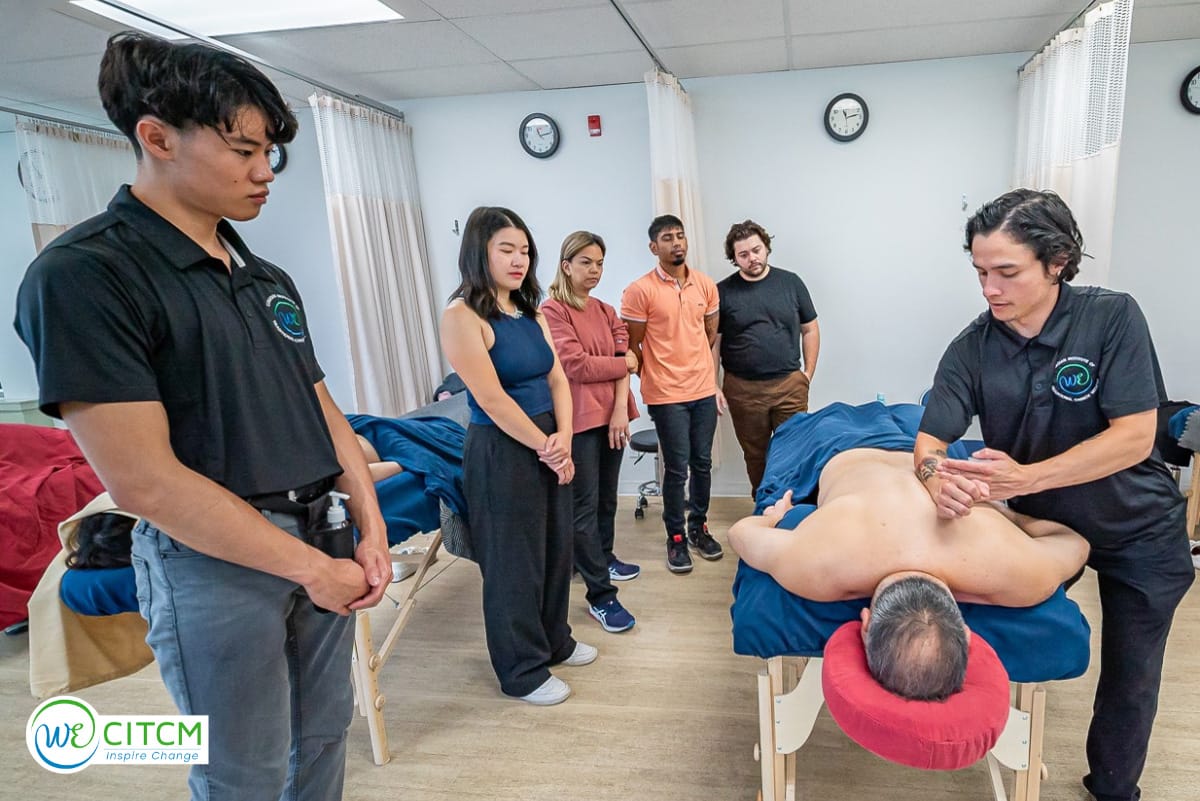
Choosing the right massage therapy school is one of the most important decisions you’ll make in your healthcare career. With multiple programs across Alberta, how do you determine which one will give you the best foundation for success?
The stakes are high. The program you choose determines which skills you’ll master, what types of patients you’ll be prepared to treat, and where you can work after graduation.
CITCM’s WE Integrated Orthopedic Massage program takes a comprehensive approach, combining Western modalities with Eastern therapies to prepare graduates who can work confidently in both clinical rehabilitation and wellness settings.
Here’s what you need to know to make an informed decision about your massage therapy education.
What Makes a Quality Massage Therapy Program?
Accreditation and Recognition
Before anything else, verify that your chosen program is recognized by major professional associations. CITCM’s massage programs are accredited by the National Health Practitioners of Canada (NHPC) and the Canadian Massage and Manual Osteopathic Therapists Association (CMMOTA), ensuring graduates can register as practicing massage therapists upon completion.
The school is also licensed by Alberta Advanced Education and designated as a DLI (Designated Learning Institution), making students eligible for student loans and grants.
Program Hours and Curriculum Depth
Alberta massage schools offer programs ranging from 1,000 to 2,200+ hours. CITCM provides both:
- 1113-hour program (one year)
- 2200-hour program (two years)
Both programs stand apart by integrating Western orthopedic assessment with Eastern modalities—a combination that gives graduates a competitive advantage in the job market.
The CITCM Approach: Western & Eastern Integration
What Does “WE Integrated” Actually Mean?
CITCM’s WE (Western & Eastern) Integrated Orthopedic Massage program teaches far more than relaxation techniques. The curriculum emphasizes:
Western Components:
✓ Orthopedic assessment and treatment protocols
✓ Western biomedicine foundations
✓ Evidence-based therapeutic massage
✓ Kinesiology and sports medicine
✓ Relaxation massage techniques
Eastern Components:
✓ Acupressure
✓ Tui Na techniques
✓ Cupping and Gua Sha
✓ Traditional Chinese Medicine (TCM) foundations
✓ Thai massage, reflexology, and scalp massage
✓ Hot Stone Therapy
This integration means CITCM graduates leave with a diverse skill set that opens doors to multiple practice settings, from clinical rehabilitation to spa and wellness environments.
Orthopedic Massage Focus
Unlike programs that primarily teach relaxation massage (sometimes called Spa Massage Certificates), CITCM places orthopedic assessment at the foundation of its curriculum.
Students learn to:
- Identify musculoskeletal dysfunction through systematic assessment
- Create evidence-based treatment plans
- Monitor and adjust treatment based on patient progress
- Communicate effectively with other healthcare providers
This clinical reasoning approach prepares graduates to work confidently in multidisciplinary settings alongside physiotherapists, chiropractors, and physicians.
CITCM Curriculum: What You’ll Learn at Massage Therapy School
CITCM’s massage program builds your skills progressively, combining online theory courses with hands-on practical training.
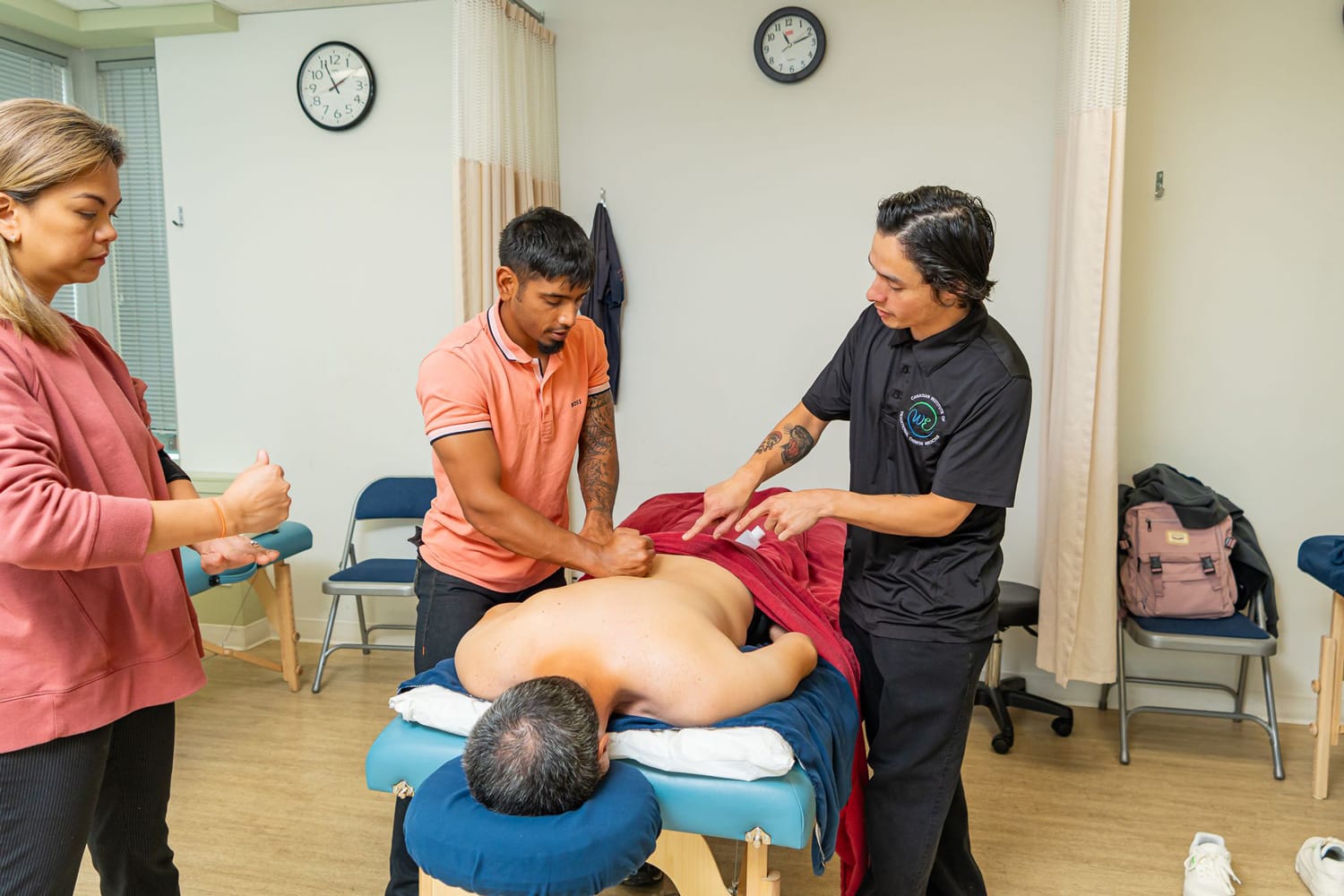
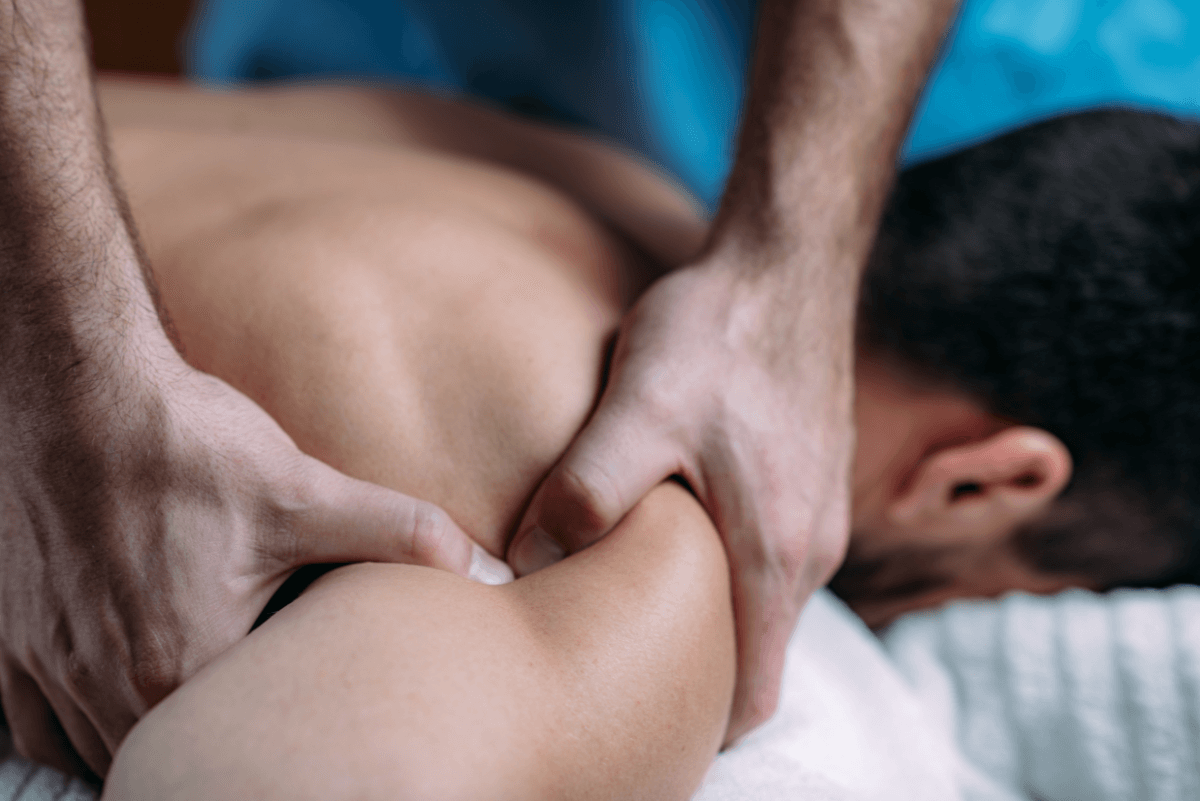
Massage therapy students learning Western and Eastern massage therapy techniques in CITCM student clinic.
Core Knowledge Areas:
- Anatomy, physiology, and biomedicine
- TCM foundations and Eastern healing principles
- Kinesiology and orthopedic assessment
- Business management and professional ethics
Hands-On Skills:
- Relaxation massage techniques
- Orthopedic assessment and orthopedic massage techniques
- Eastern modalities: cupping, acupressure, Tui Na, Gua Sha
- Specialized techniques: Thai massage, reflexology, scalp massage, TMJ massage
- Hot stone and hydrotherapy applications
Clinical Training: Students begin treating real patients under supervision starting in the second semester, with opportunities at both the onsite CITCM student clinic and community partner locations, including Unison Alberta at Kerby Centre, The Alex Community Centre, Mustard Seed, and Shalem Society for Senior Citizens Care.
Flexible Format:
→ Theory courses: Primarily online asynchronous
→ Practical classes: In-person, 2 days per week (Wednesdays & Thursdays)
→ Online clinical practicum and work practicum: Scheduled outside of practical class hours, allowing students to develop diverse skill sets and gain the hands-on experience employers expect.
This format makes it realistic for career changers and working professionals to complete the program without sacrificing income or family time.
Career Outcomes: Where Do Graduates Work?
Employment Rate
CITCM’s 2200-hour massage program boasts a nearly 100% employment rate among graduates, a strong indicator of both program quality and industry demand.
Practice Settings
Graduates work across diverse environments:
Clinical Settings:
- Multidisciplinary clinics (alongside chiropractors, physiotherapists, naturopaths)
- Sports therapy centers
- Rehabilitation facilities
- Home-based clinical practices
- Mobile clinic services
Wellness Settings:
- Spa facilities
- Corporate wellness programs
- Athletic clubs and gyms
- Resorts and cruise ships
What Students Say About CITCM
When asked what they value most about the program, CITCM students consistently highlight:
✅ Diverse skill set that differentiates them from other massage therapy graduates
✅ Small practical class sizes allowing one-on-one instruction and personalized feedback
✅ Approachable instructors who are actively practicing in the field
✅ Positive learning environment that balances rigour with support
✅ Integrated clinic training starting early in the program

CITCM massage therapy students gathered outside the Calgary campus building.
Beyond the Diploma: Additional Benefits of CITCM Massage Therapy School
Scholarship Opportunities
CITCM offers over $10,000 in annual scholarships, including:
- Academic Excellence Award
- Clinical Excellence Award
- Orthopedic Massage Scholarship
- …and more!
Continuing Education
After graduation, CITCM offers ongoing professional development through weekend workshops and seminars. The Continuing Education program provides opportunities to learn advanced techniques, expand your skill set, and connect with fellow practitioners.
Pathway to Additional Credentials
For graduates interested in expanding their practice scope, CITCM offers pathways to a variety of acupuncture and TCM programs.
How to Evaluate Your Options
Questions to Ask Any Massage Therapy School in Alberta
- What is the program’s total hour count, and how does it break down between theory, practical skills, and clinical training?
- What percentage of graduates are employed within 6 months of completion?
- Which professional associations recognize this program?
- What is the student-to-instructor ratio in practical classes?
- When do students begin treating real patients under supervision?
- What Eastern modalities are included in the curriculum, if any?
- Are students eligible for government student loans?
- What is the class schedule, and is it compatible with working part-time?
- What additional certifications or specializations can I pursue after graduation?
- Can I visit the school, observe a class, and tour the clinical facilities?
- Does the school have an offsite work practicum program?
Red Flags to Watch For
🚩 Programs under 1,000 hours (insufficient for professional competency)
🚩 No onsite clinical training component
🚩 Instructors without active clinical practice experience
🚩 No clear pathway to professional registration after graduation
Making Your Decision
Choosing a massage therapy school isn’t just about location or cost. It’s also about finding a program that will prepare you for the career you envision. Consider:
If you want to work primarily in clinical rehabilitation settings: Prioritize programs with strong orthopedic assessment training and multidisciplinary clinic exposure.
If you’re interested in integrative wellness: Look for programs that incorporate both Western therapeutic techniques and Eastern healing modalities.
If you’re balancing education with work or family: Seek flexible scheduling options with a mix of online theory and limited in-person practical days.
If you value practical, hands-on experience: Confirm that clinical training begins early and includes diverse patient populations.
CITCM’s WE Integrated Orthopedic Massage program is designed for students who want comprehensive training that opens doors to multiple career paths, from clinical practice to wellness settings, and from employee positions to independent practice ownership.
Explore whether CITCM is the right fit for your massage therapy education. Book an info session and campus tour to experience the learning environment firsthand, meet current students and instructors, and get your specific questions answered.
Related Articles
CITCM Massage Therapy Training